The Longitudinal Associations Between Substance Use, Crime, and Social Risk Among Emerging Adults - A Longitudinal Within- and Between-Person Latent Variables Analysis
Abstract
Background - The reciprocal relationship between crime and substance use is well known. However, when examining this relationship, no study to date has disaggregated between- and within-person effects, which represents a more methodologically sound and developmentally-appropriate analytic approach. Further, few studies have considered the role of social risk (e.g., deviant peers, high-risk living situa-tions) in the aforementioned relationship. We examined these associations in a group of individuals with heightened vulnerability to substance use, crime and social risk - emerging adults (aged 18–25 years) in substance use treatment. Methods - Participants were 3479 emerging adults who had entered treatment. We used auto-regressive latent growth models with structured residuals (ALT-SR) to examine the within-person cross-lagged association between crime and substance use and whether social risk contributed to this association. A taxonomy of nested models was used to determine the structural form of the data, within-person cross-lagged associations, and between-person associations. Results - In contrast to the extant literature on cross-lagged relations between crime and substance use, we found little evidence of such relations once between- and within-person relations were plausibly disaggregated. Yet, our results indicated that within-person increases in social risk were predictive of subsequent increases in crime and substance use. Post-hoc analyses revealed a mediation effect of social risk between crime and substance use. Conclusions - Findings suggest the need to re-think the association between crime and substance useamong emerging adults. Individuals that remain connected to high-risk social environments after finishing treatment may represent a group that could use more specialized, tailored treatments.
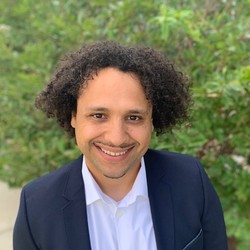
Gabriel J. Merrin
Assistant Professor
My primary area of research examines the development and stability of aggression, substance use, victimization, and other problem behaviors across adolescence and in the transition to young adulthood.